

Most international aid and development agencies rely on polished marketing and communication frameworks to attract donors and respond to global emergencies.
Powerful images, emotional beneficiary stories and simplified impact narratives dominate campaigns aimed at preventing humanitarian crises.
Yet these strategies, while effective for short-term fundraising, often fail to involve affected communities in co-creating the support they receive.
As a result, programmes become vulnerable to funding cuts and shifting donor priorities, leaving communities exposed when the spotlight fades.
Somalia’s Aid Experience Highlights the the Humanitarian Crises
Somalia offers one of the clearest examples of this fragility.
In 2017, the United Nations, INGOs, the Federal Government of Somalia and donors mobilised USD 1.3 billion — then the largest response in the country’s history — to avert famine.
In 2022, as drought again threatened millions, the figure rose to USD 2.1 billion. Yet in 2025 funding dropped sharply to less than a quarter of what was required.
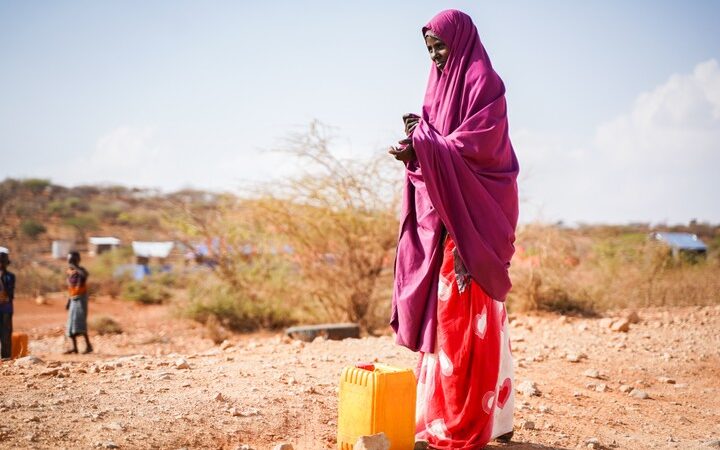
At the same time, 1.8 million Somali children under five are acutely malnourished, nearly 470,000 of them severely, as conflict, drought and dwindling funds converge.
This funding rollercoaster also exposes the dangers of over-reliance on a small pool of donors.
Recent U.S. cuts triggered mass layoffs at major NGOs, undermining continuity of life-saving programmes.
Somalia’s government still depends on external grants for around half of its budget, which means progress can be quickly reversed when donor priorities shift.
Beyond Powerful Images: The Communication Gap
ABC News coverage of a severely malnourished Somali child in 2022 illustrates both the strengths and weaknesses of the prevailing model.
The story moved audiences, generated donations and expanded relief efforts.
But two years later, after USAID’s withdrawal, the same health facility was at risk of running out of therapeutic food.
Donor-focused communication is essential for visibility, but insufficient for resilience.
Blurred Lines Between Visibility, Fundraising and Empowerment
The persuasive communication model sustains fundraising but falls short in contexts like Somalia, where humanitarian crises are cyclical and donor fatigue is real.
Stories created for international markets are often repurposed for Somali audiences without adaptation, overlooking local perspectives and weakening engagement.
This risks turning success stories into temporary fixes rather than building lasting capacity.
Participatory Communication Builds Ownership and Resilience
A more sustainable alternative is participatory communication — a model that actively involves communities in decision-making, programme design and evaluation.
This means consulting families about the support they need, engaging local health workers in planning, involving community leaders in monitoring outcomes and tailoring communication products for Somali audiences.
By sharing authority rather than simply collecting feedback, aid agencies can strengthen local ownership, trust and long-term impact.
Local Media Show a Path Forward
Some Somali initiatives already demonstrate the potential of this approach.
The United Nations’ “Tubta Nabada” (Path to Peace) radio magazine, broadcast three times a week with local media partners, brings together communities, civil society and government representatives to discuss peace, security and development.
Similarly, Save the Children Somalia launched a child-focused podcast in 2023 to amplify young voices. Both go beyond fundraising to foster dialogue, though more rigorous evaluation of their impact is still needed.
What Needs to Happen
Somalia’s recurring humanitarian crises underscore the fragility of aid systems built around donor-driven storytelling.
Despite large humanitarian responses in 2017 and 2022, the country still faces extreme weather, displacement and underfunded services.
Shrinking donor funds and policy shifts — such as USAID’s withdrawal — show why the old model is no longer enough.
While visibility and fundraising remain essential to sustain life-saving interventions, they cannot substitute for genuine empowerment.
Sustainable Change in Somalia
Aid agencies must embed participatory communication into the heart of their strategies, giving communities real authority to shape stories, set priorities and evaluate outcomes.
In an era of shrinking funds and shifting donor priorities, only communication that empowers communities can build the trust, resilience and ownership necessary for sustainable change in Somalia and beyond.
Source: Global Voices