

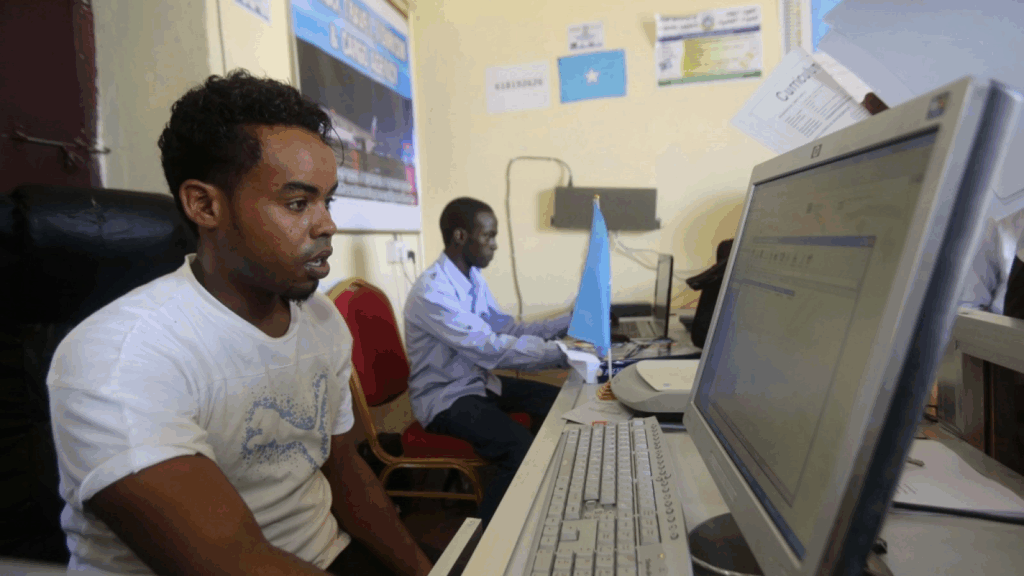
Somali cyber cafes have turned into the main place where young people actually learn in cities like Mogadishu, Hargeisa, Bosaso, and Galkayo. Regular schools close at 12 or 1 p.m., teachers are often missing, books are old and torn, and electricity is rare. Because of that, thousands of students go straight to the nearest Somali cyber cafe after midday and stay there until night, using it as their real classroom.
Why did Somali Cyber Cafes become more important than regular schools?
The story is the same everywhere in Somalia. Many school buildings are half-broken from the war, classrooms are packed with 90–120 students, and most teachers haven’t been paid in months. Parents who can’t afford private schools tell their children: “Just go to the Somali Cyber Cafes and study there.” One hour costs only 5,000–8,000 Somali shillings, and the places have light, fans, and internet all day thanks to big generators.
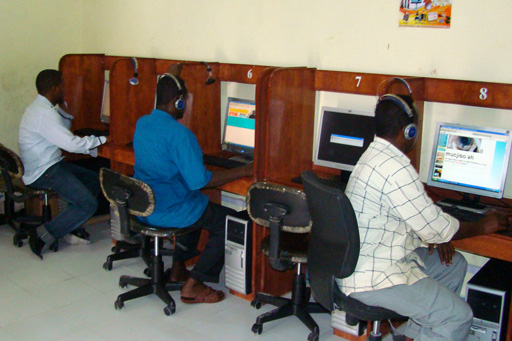
What you see inside cyber cafes every afternoon
If you visit any Somali cyber cafe after 3 p.m. you will find it full of school students. Some watch free lessons on YouTube, others use Khan Academy or Somali teachers who upload videos on Facebook. Many share one computer between three or four friends to save money. You can hear students repeating English words, solving math problems together, or asking the cafe worker to print their homework. Some places even made quiet rooms in the back and wrote “Study Only – No Games.”
Now there are young guys and girls who finished university and sit every day in popular Somali cyber cafes to help students for small money. They explain science, correct essays, or teach computer skills. Students pay the cafe for the seat and pay the tutor 2 or 3 dollars extra. In Hargeisa one famous place has a timetable on the wall: Monday–Wednesday math tutor, Thursday–Saturday English tutor.
The problems that come with using cyber cafes as classrooms
Of course not everything is good. Many cyber cafes have no internet filter, so some students end up watching TikTok or football the whole time. The air is smoky, the chairs are hard, and sometimes fights start over a computer. Parents worry about safety, especially for girls who come home late. There are also dangerous websites anyone can open. But still, most families say cyber cafes are better than nothing.
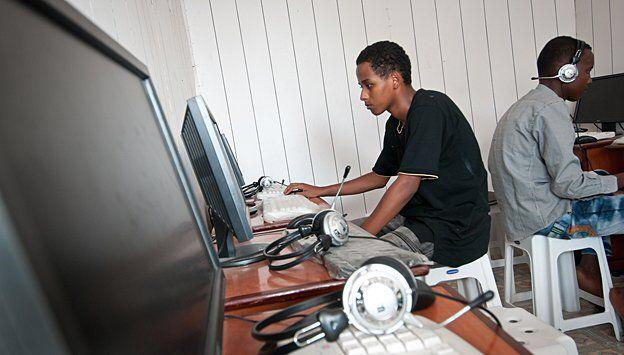
How students prepare for big exams in cyber cafes
When national Form Four exams come close, cyber cafes become exam centers without walls. Students download past papers, join WhatsApp groups for answers, and watch crash-course videos. Many who passed and got scholarships to Turkey, Sudan, or Malaysia say “I studied everything in the Somali cyber cafe near Hamarweyne market” or “the one in Taleh street saved my future.”

Will cyber cafes stay the main learning place for Somali youth?
The government talks about building new schools and giving tablets to students, but people have heard these promises for years and nothing big happened yet. Private schools are too expensive for normal families. Internet is getting cheaper every year, generators are more common, and more Somali teachers are uploading lessons online. So for now and probably the next five or ten years, Somali cyber cafes will keep being the place where the next generation of doctors, engineers, pilots, nurses, and teachers actually study.
Read Also: How Somali Education Survived War and Poverty
Walk around any Somali city in the evening and you will see school bags hanging on chairs, notebooks open next to keyboards, and hundreds of young faces lighted by computer screens. That blue glow you see from the street? That’s today’s Somali classroom, and right now it’s called a Somali Cyber Cafes.