

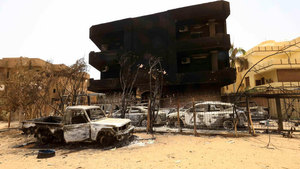

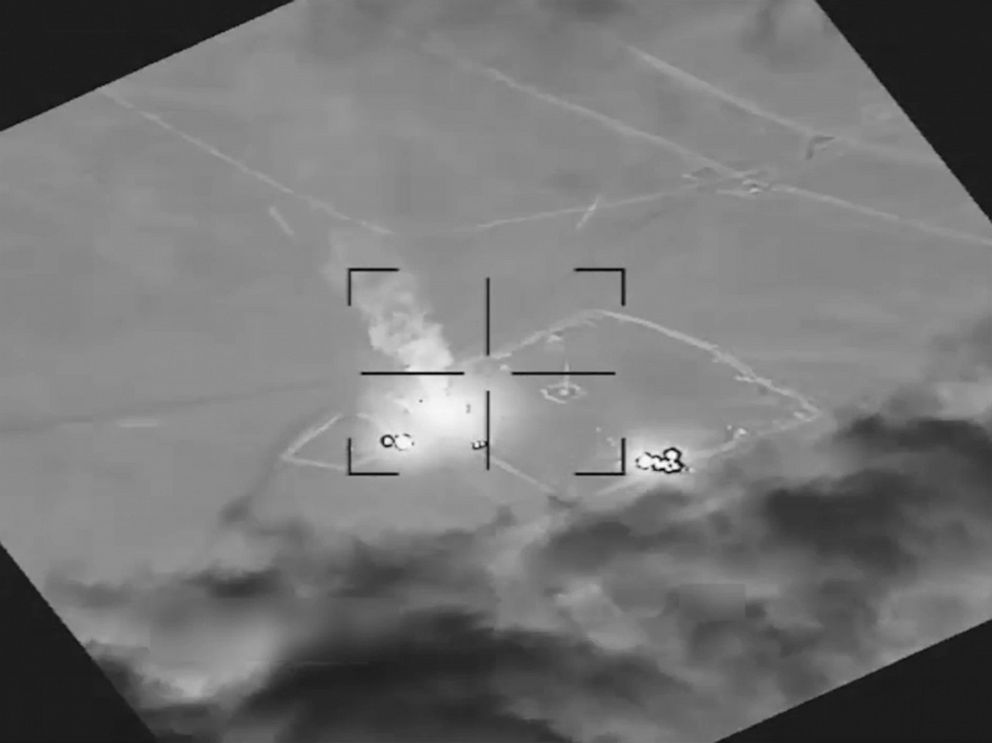
In one of the most serious escalations between Washington and Tehran in years, the United States carried out a swift and targeted military strike at dawn on Sunday, June 22, 2025, hitting nuclear and strategic facilities inside Iran.
Targets of the US Airstrike on Iran
According to well-informed American sources, the strike targeted the following:
- Natanz Nuclear Facility, known for its uranium enrichment program, where a section related to centrifuge development was hit.
- An underground site near Isfahan, suspected of hosting secret undeclared nuclear activities.
- Fordow Underground Nuclear Facility, deeply fortified under a mountain.
Sources confirmed that the strikes did not target active reactors directly but instead damaged critical support infrastructure, aiming to cripple Iran’s ability to rapidly advance its nuclear program.
Objective: Disrupting Iran’s Nuclear Program
Pentagon sources stated that the US airstrike on Iran main focus was on infrastructure that is crucial to uranium enrichment and centrifuge development.
Especially at Natanz and Isfahan, which house research centers and technical support for Iran’s nuclear ambitions.
Analysts noted that targeting the deeply buried Fordow facility reflects high-level intelligence and technological capability, as Iran has long considered it its final line of defense against potential attacks.
Weapons Used in US Airstrike on Iran
Two senior Pentagon officials confirmed that three US B-2 stealth bombers were deployed to strike Fordow, which is located under a mountain nearly 300 feet (over 90 meters) deep.
Each aircraft carried two GBU-57 MOP (Massive Ordnance Penetrator) bombs—among the heaviest non-nuclear bombs in the US arsenal, specially designed to penetrate fortified underground sites.
Only B-2 bombers can deploy such bombs due to their massive size and weight (around 14 tons).
Sources added that Fordow is considered one of the most sensitive and strategic enrichment sites, surrounded by dense air defenses, making MOP bombs the only effective choice for destroying it.
Can Iran and Israel War 2025 Affect Somalia’s Security
Tomahawk Missiles Hit Natanz and Isfahan
The strikes on Natanz and Isfahan were carried out using long-range Tomahawk missiles launched from US submarines stationed in the Persian Gulf and the Arabian Sea.
While the exact number of missiles used in US airstrike on Iran was not disclosed.
The attacks targeted critical facilities linked to centrifuge systems and uranium enrichment research, believed to be part of a covert expansion beyond IAEA oversight.

US Sends Clear Message to Iran Following the Strike
In a significant diplomatic move following the US airstrike on Iran, Washington informed Tehran that it does not intend to pursue regime change.
According to CBS, the US government directly contacted Iranian officials on Sunday, stating that the strike was “limited to what was planned” and that no further attacks were intended.
The message emphasized that the United States does not seek to topple Iran’s government, in an effort to contain the situation and avoid a wider regional war.
The Wall Street Journal reported that US Special Envoy Steve Whitkoff was authorized to communicate with the Iranians, as President Donald Trump aimed to preserve a narrow window for diplomatic engagement that could ease tensions.
Iran Responds with “Kheibar” Missiles
In response to the US Airstrike on Iran, Iranian media announced that its counterattack on Israel on Sunday morning included “Kheibar” ballistic missiles for the first time, marking a new phase in Iran’s missile capabilities.
According to Iranian outlets:
“The 20th wave of ‘True Promise 3’ included Kheibar-class missiles for the first time.”
What is the Kheibar Missile?
The Kheibar ballistic missile, also known as Khorramshahr-4, is the fourth generation in the domestically developed Khorramshahr missile series.
It is one of the most advanced products of Iran’s Aerospace Organization under the Ministry of Defense.
Advanced Technical Capabilities:
- Range: 2,000 kilometers, capable of striking wide areas across the Middle East and parts of Europe and Asia.
- Speed: Reaches Mach 16 outside the atmosphere and Mach 8 within, making it extremely hard to detect or intercept.
- Warhead: Carries a 1,500 kg warhead, the heaviest Iran has developed to date, with high precision even without terminal-phase guidance—enhancing its tactical effectiveness.
“Arvand” Engine Enhances Agility
The missile is powered by a locally developed “Arvand” liquid-fuel engine, which, according to Iranian officials, offers faster launch speeds, improved maneuverability, and reduced reaction time before firing—making it a formidable addition to Iran’s arsenal.
The US Airstrike on Iran, Escalation or Strategic Deterrence?
With the US airstrike on Iran and its respond with advanced missile deployment, the region appears to be entering a dangerous new phase of confrontation.
Despite diplomatic signals suggesting neither side wants full-scale war, the growing sophistication of military capabilities may reshape the balance of power in the Middle East.