


Close Menu
    Follow us
    • Facebook
    • Twitter
    What's Hot
    Somali City Names Reveal East Africa’s Trading History

    Somali City Names Reveal East Africa’s Trading History

    How Office Sitting Habits Affect Health: 7 Easy Work Tips

    How Office Sitting Habits Affect Health: 7 Easy Work Tips

    How Champions League Final Could Change Arsenal and PSG History

    How Champions League Final Could Change Arsenal and PSG History

    Facebook X (Twitter) Instagram
    Saturday, May 30
    Facebook X (Twitter) Instagram TikTok Threads YouTube
    Somali probeSomali probe
    • Local News
    • Business & Technology
    • Politics
    • Education
    • Health
    • Culture
    Somali probeSomali probe
    Home»Business & Technology»Blockchain, A Decentralized Digital Ledger.. what is this and how to use in 2026?
    Business & Technology

    Blockchain, A Decentralized Digital Ledger.. what is this and how to use in 2026?

    November 5, 2025
    Share Facebook Twitter Pinterest Telegram LinkedIn Tumblr Email Copy Link
    BLOCKCHAIN, A DECENTRALIZED DIGITAL LEDGER
    BLOCKCHAIN, A DECENTRALIZED DIGITAL LEDGER
    Share
    Facebook Twitter LinkedIn Pinterest Reddit Telegram WhatsApp Email Copy Link

    Blockchain, a decentralized digital ledger, that securely records transactions across network of computers, ensuring transparency without central authority. Each verifies transaction is grouped into blocks and linked chronologically, forming an unalterable chain.

     Using consensus mechanisms like Proof of Work and Proof of Stake, blockchains ensures trust and accuracy.  Despite challenges such as scalability and energy use, its applications in finance, healthcare and logistics highlight its potential to revolutionize secure and transparent data management worldwide.

    BLOCKCHAIN, A DECENTRALIZED DIGITAL LEDGER: UNDERSTANDING THE CONCEPT OF BLOCKCHAIN

    Blockchain, a decentralized digital ledger, that record transactions across multiple computers in a way that ensures transparency, security and immutability. Instead of relying on a central authority such as a bank or government, blockchain uses a distributed network of nodes that work together to verify and record transactions. Each transaction is grouped into “block” and once verified, it is added to a chronological chain of previous blocks, hence the term “blockchain”.

    This structure prevents data from being altered retroactively without altering all subsequent blocks, which would require the consensus of the network. Blockchain technology first gained prominence with the creation of Bitcoin in 2009 but has since evolved beyond cryptocurrency. It now serves as the foundation for applications in finance, supply chain management, healthcare and digital identity verification

    Read also:

    .TECHNOLOGY AND E-COMMERCE DATABASE

    AI SUPPORT AT CYBERSECURITY

    THE MECHANISM BEHIND BLOCKCHAIN TRANSACTIONS

    Block chain, a decentralized digital ledger, when a user initiates a transaction on a block chain, it is broadcast to a network of computers known as nodes. These nodes use cryptographic algorithms to validate the transaction’s authenticity and ensure the sender has sufficient assets or permissions. Once validated, the transaction combined with others to form a block, before a block can be added to the chain, it must be verified through a consensus mechanism such as Proof of Work (PoW) or Proof of Stake (PoS).
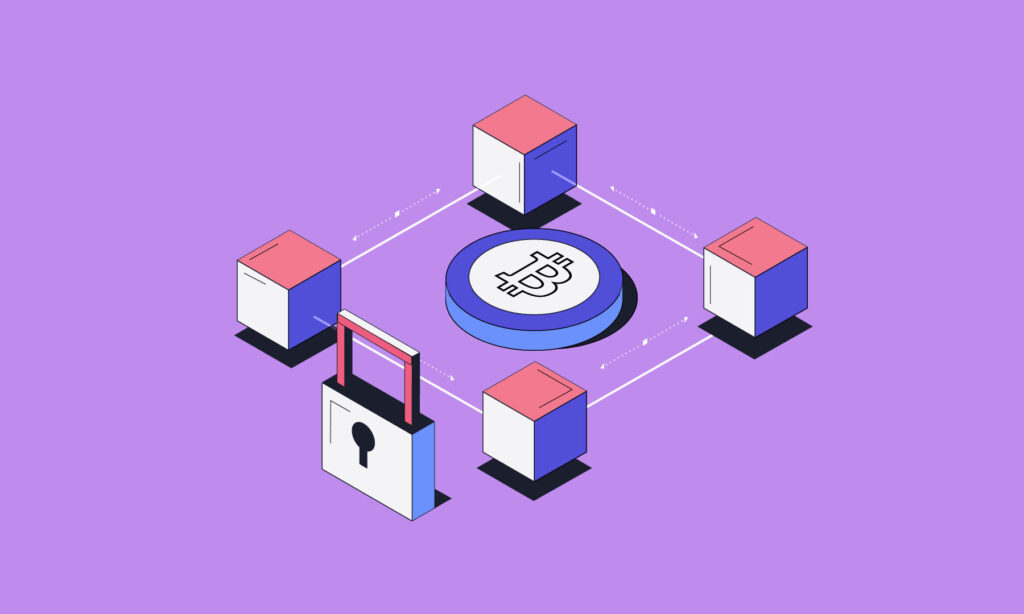
    Proof of Work involves solving complex mathematical puzzles to validate transactions, a process that ensures security but consumes significant energy. In contrast, Proof of Stake selects validators based on number of tokens they hold, making a more energy-efficient. After consensus is reached, the block is permanently added to the block chain and distributed across all network participants, ensuring that every copy of the ledger remains identical and temper-proof.

    BENEFITS, CHALLENGES AND FUTURE POTENTIAL

    Block chain, a decentralized digital ledger, offers numerous advantages, including enhanced security, transparency and efficiency. Since every participant holds a copy of ledger, data tampering is nearly impossible and all transactions can be traced back to their origin. This makes block chain particularly useful for industries that require trust, such as finance, logistics and healthcare. Additionally, blockchain eliminates intermediaries, reducing costs and transaction times.

    However, blockc hain faces challenges like scalability, energy consumption and regulatory uncertainty. The need for high computational power in some consensus models can make it inefficient and environmentally taxing. Despite these challenges, blockchain’s potential continues to expand, with the innovations like smart contracts, decentralized finance and non-fungible tokens paving the way for a more transparent and autonomous digital economy. As technology matures, blockchain could transform how the world exchanges information and value securely.

    .

    Share. Facebook Twitter LinkedIn Reddit WhatsApp Telegram Email Copy Link
    Previous ArticleUN ENHANCES SOMALIA’S DIGITALIZATION
    Next Article UUR ISKA-SOO-XAAQISTA SHARCI-DARADA EE SOOMAALIYA

    Related Posts

    How Champions League Final Could Change Arsenal and PSG History
    Business & Technology

    How Champions League Final Could Change Arsenal and PSG History

    May 30, 2026
    How Future AI Growth Is Reshaping Jobs Without Layoffs
    Business & Technology

    How Future AI Growth Is Reshaping Jobs Without Layoffs

    May 29, 2026
    7 Simple Medical AI Systems Changing Hospital Work
    Business & Technology

    7 Simple Medical AI Systems Changing Hospital Work

    May 26, 2026
    Latest Posts
    Somali City Names Reveal East Africa’s Trading History

    Somali City Names Reveal East Africa’s Trading History

    How Office Sitting Habits Affect Health: 7 Easy Work Tips

    How Office Sitting Habits Affect Health: 7 Easy Work Tips

    How Champions League Final Could Change Arsenal and PSG History

    How Champions League Final Could Change Arsenal and PSG History

    How Somali Hot Drinks Strengthen Traditional Gatherings

    How Somali Hot Drinks Strengthen Traditional Gatherings

    You May Also Like
    How Champions League Final Could Change Arsenal and PSG History

    How Champions League Final Could Change Arsenal and PSG History

    May 30, 2026

    The champions league final is finally here this Saturday night and football fans all over…

    How Future AI Growth Is Reshaping Jobs Without Layoffs

    How Future AI Growth Is Reshaping Jobs Without Layoffs

    May 29, 2026

    Future AI growth is not going to cause a massive global job disaster according to…

    7 Simple Medical AI Systems Changing Hospital Work

    7 Simple Medical AI Systems Changing Hospital Work

    May 26, 2026

    Medical AI systems are becoming a normal part of everyday hospital work because technology is…

    7 photos of Mohamed Salah emotional Liverpool goodbye

    7 photos of Mohamed Salah emotional Liverpool goodbye

    May 25, 2026

    The 10 photos of Mohamed Salah saying goodbye to Liverpool fans marked the end of…

    Future AI jobs: How is smart tech creating new careers?

    Future AI jobs: How is smart tech creating new careers?

    May 24, 2026

    Future AI jobs are a topic that almost everyone is talking about today because people…

    Facebook X (Twitter) Instagram Threads TikTok

    News

    • Local News
    • Business & Economy
    • Politics
    • Education
    • Health
    • Culture

    Editor's choice

    Culture

    Somali City Names Reveal East Africa’s Trading History

    May 30, 2026
    Health

    How Office Sitting Habits Affect Health: 7 Easy Work Tips

    May 30, 2026
    © 2026 Somali Probe
    • Privacy Policy
    • Terms & Conditions
    • Contact us

    Type above and press Enter to search. Press Esc to cancel.