

The religious regime scam is a heavy reality that many people living under strict systems eventually have to face. In a recent and revealing episode of Trending Echoes host Elyazia Al Hosani sat down with Imam Mohammad Tawhidi to pull back the curtain on how power actually works in Iran. Tawhidi is a governing member of the Global Imams Council and he does not hold back when describing how faith is often used as a front for political control. He argues that the current system is designed to benefit a few men at the top while the rest of the population is kept in the dark through a carefully crafted narrative.
The Inner Workings of The Religious Regime Scam
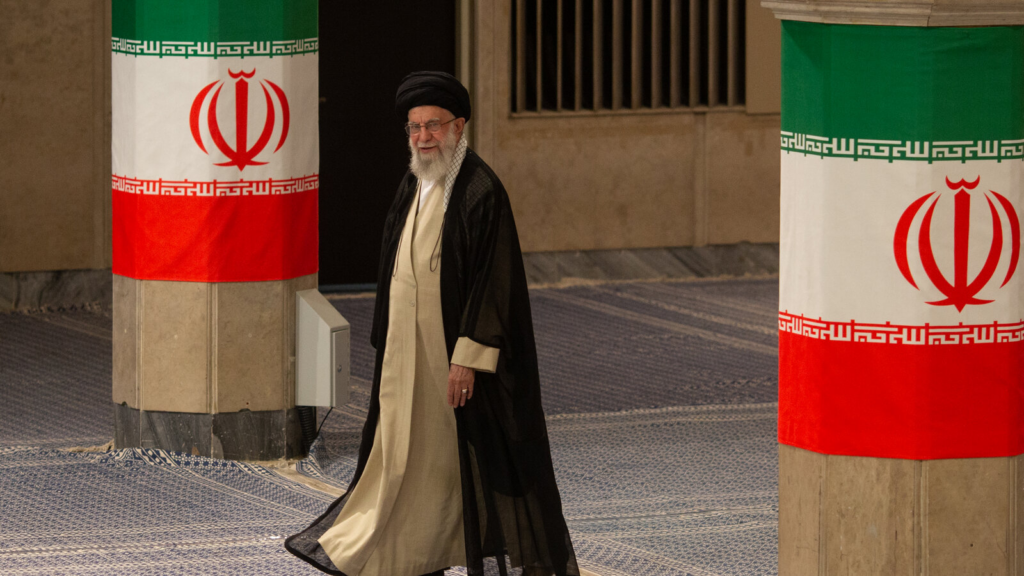
During the interview Tawhidi explains that the structure of the Iranian government is fundamentally built on a lie. He points out that while the world sees a president the real authority belongs to the Supreme Leader Ali Khamenei. According to Tawhidi this setup is essentially the religious regime scam in action. By claiming that the Supreme Leader is appointed by divine authority or through the Mahdi the regime makes it so that questioning the leader is seen as questioning God Himself. This prevents any real political accountability or opposition from taking root.
Read Also: Iran Leadership Transition: Who Is in Charge?
Tawhidi shares that previous Iranian leaders at least had a place in the international community as kings. Today the leader acts like a dictator but hides behind a turban. This creates a confusing situation for the 90 million people living there who are told they have a vote only to find out their elected officials report to a single unelected man.
Education and the Roots of Indoctrination
A huge part of the religious regime scam starts in the classroom. Tawhidi reflects on his own education at Al-Mustafa University in Qom. He describes it not as a place of higher learning but as a factory for producing revolutionary soldiers. The curriculum is designed to make students ready to die for the regime. He admits that he was a victim of this system because he was vulnerable and surrounded by people who all believed the same thing.
He notes that the honey poison is inserted into the daily rituals and lessons. It was not until he saw high-ranking religious scholars being arrested for having different opinions that he started to see through the religious regime scam. He realized that you could be a faithful person and still think the government was wrong. This realization was the first step in his journey toward becoming an advocate for peace and an opponent of extremism.
Read Also: Israeli Mossad Operations: Unveiled Secrets After Iran-Israel War
Transnational Links and Political Corruption
The discussion also dives into how this brand of extremism is not limited to just one country. Tawhidi links the religious regime scam to the influence of the Muslim Brotherhood. He claims that these movements have infiltrated Shia politics in places like Iraq. He points to groups like Hizb al-Da’wa which he calls the Shia version of the Muslim Brotherhood. By hijacking the faith these groups have left countries with no electricity no water and no safety.
Read Also: Could the Iran Gas Explosions Lead to a Major Energy Crisis?
Tawhidi even mentions that Khamenei himself was influenced by the writings of Sayyid Qutb who was a key figure in the Muslim Brotherhood. This shows that the ideological foundations of these regimes are often more about power than they are about actual religious differences.
Finding the Truth and Moving Forward
Exposing the religious regime scam is the main goal of Tawhidi’s current work. He describes himself as allergic to extremism because he has seen the damage it does to families and nations. His father fled Iran because the seminaries were turned into battlegrounds. By speaking out he hopes to show others that the honorable state promised by leaders like Khomeini was actually a path to violence and poverty.
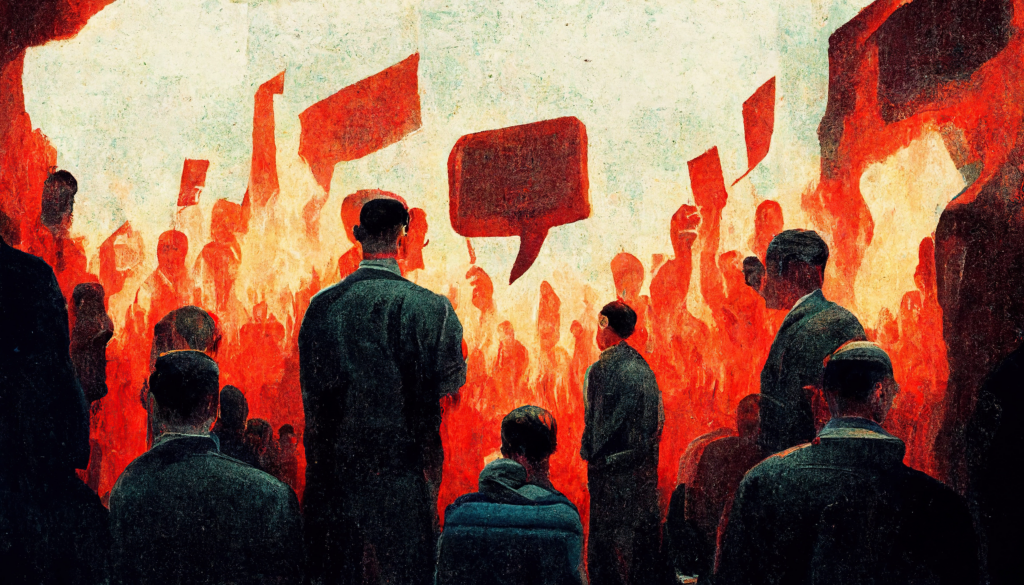
The conversation concludes with the idea that people must learn to look past the religious symbols and question the motives of those in power. When a government runs like a family business rather than a democracy it is usually a sign of the religious regime scam. Understanding this is the only way to begin the process of reform and to build a future based on transparency rather than indoctrination.
As more people wake up to the reality of the religious regime scam the grip of these ideological systems begins to weaken. Tawhidi’s story is a powerful reminder that even those who were once part of the system can find their way out and speak the truth. He believes that identifying the religious regime scam is the first step toward reclaiming the true essence of faith from those who use it for their own gain. Ultimately the survival of the religious regime scam depends on silence which is why having these candid discussions is so important for the region today.