

Somali football history started a very long time ago during the early days of the twentieth century when the country was under colonial rule. Regular people in the towns loved the sport immediately because it was a simple game that anyone could play with a ball made of old cloth or leather. Over the decades local neighborhoods began setting up their own small teams to play against each other on weekends which brought a lot of joy to the communities.
Read Also: Why Are Golis Mountains Somalia a Paradise for Campers?
The first official teams were created around the 1950s just before the country gained its independence from foreign powers. This was a very proud moment for the nation because players could finally wear their own flag on their shirts.
Somali Football History and the Creation of the National Stadium
The golden era of Somali football history happened during the 1970s and 1980s when the government spent money to build the massive Mogadishu Stadium. This beautiful stadium became the main home for the national team which is nicknamed the Ocean Stars by its passionate fans. International teams from across East Africa used to travel to Mogadishu to play big matches in front of packed crowds of sixty thousand people cheering loudly. The local league was very strong during this period with famous clubs like Horseed and Elman dominant in the local tournaments.

However this wonderful chapter of Somali football history faced a massive breakdown when the civil war started in 1991. The beautiful stadium was turned into a military base for different armies and the local league had to stop completely for many years because it was too dangerous for people to gather outside.
Read Also: Nugaal Valley Beauty: A Hidden African Treasure
Preserving the Sport inside Dangerous Neighborhoods
During the darkest years of the war local coaches and brave players did not give up on their passion. Young boys would still find small dirt fields between broken buildings to kick a ball around even while hearing guns in the distance. This survival instinct is a very important part of Somali football history because it kept the youth away from joining dangerous local militias.
Local business owners eventually started putting money together to buy clean shirts and real leather footballs for the kids in different districts. They organized hidden tournaments to bring communities together and heal the mental scars caused by the ongoing violence.
The Return of International Matches to Mogadishu
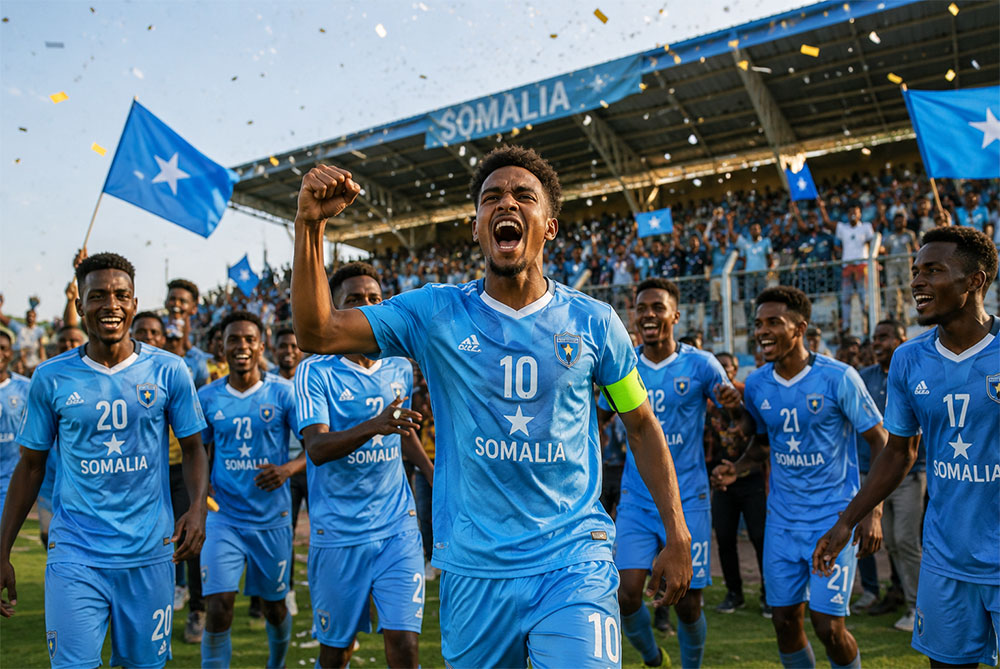
In recent years the situation has improved significantly and Somali football history entered a new era of hope and reconstruction. The national stadium was cleaned up completely the military left the grass and the national federation installed modern artificial turf. For the first time in nearly thirty years young fans could walk safely into the stadium to watch a live match under the bright lights.
The national team also started traveling abroad again to play in the regional CECAFA cup and World Cup qualification matches. Even though they do not have the big budgets of rich nations their presence on the international field brings immense pride to millions of citizens back home.
How Somali Football History Inspires the Next Generation
Today thousands of young kids across cities like Garowe Hargeisa and Kismayo dream of becoming professional players in Europe just like their heroes. The local football federation is trying to set up small academies to teach young children the proper rules and tactics from an early age.
This modern movement proves that Somali football history is not just about the past but it is actively shaping a peaceful future for the country. When youth focus on sports they learn about teamwork discipline and fair play which helps them become better citizens for their nation.
The Big Challenges Facing Local Clubs Today
Of course there are still many difficult obstacles that the sport faces every day in the region. Most local clubs do not have enough sponsorship money to pay regular salaries to their players or buy proper medical equipment for injuries.
To make sure that Somali football history keeps moving forward the government needs to work closely with international sports bodies to get better training facilities. If the local stadiums receive more support the country can easily produce world class talent that can compete at the highest levels.

Read Also: Why Visit Zeila Islands on Your Next Adventure?
In conclusion the story of the sport in this nation is a powerful tale of resilience and deep love for the game. We cannot forget how football kept people connected when everything else was falling apart during the war years. By investing in young talent building safe pitches and supporting local leagues the country can write a beautiful new chapter. It is easy to see that celebrating Somali football history is a wonderful way to show the true peaceful heart of a nation that refuses to give up on its dreams.