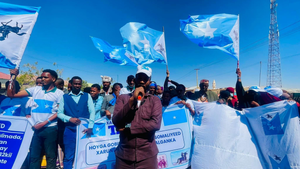


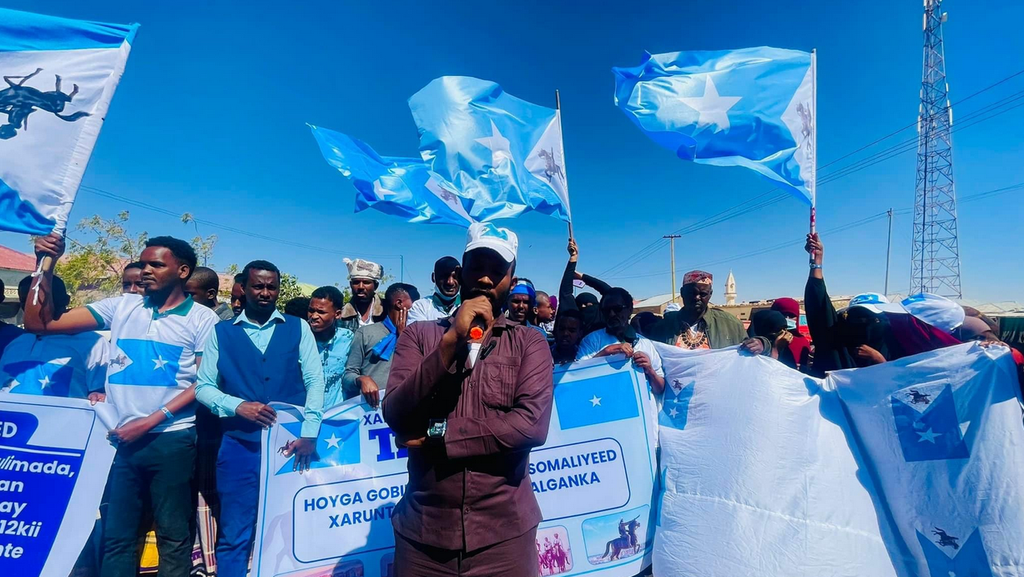
Puntland political crisis became serious after the regional government decided to freeze all previous agreements with the central government in Mogadishu. The president of Puntland Said Abdullahi Deni made this decision after long tension between the region and the federal leaders. He said his administration will operate on its own until a full political agreement that satisfies all sides is reached. This step shows how deep the disagreement is between the regional leaders and the federal authority in Somalia right now.
Read Also: Why Does Somaliland Presidential Visit Matter for Recognition?
Puntland Political Crisis: Rising tensions between Garowe and Mogadishu
The situation has been getting worse over many months because both sides have completely different ideas about how the country should be run. Puntland leaders have been very clear about their opposition to any major changes made to the constitution or the voting system without a consensus. When the central government moved forward with its own plans, Puntland felt ignored and chose to pull back from all cooperation agreements.
Understanding the Puntland political crisis and its root causes
To understand why this happened you have to look at the main issues like power sharing and resource management. Somalia is built on a federal model where power is supposed to be shared between the center and the states. However Puntland believes Mogadishu is trying to take too much control into its own hands. Disputes over election formats have created huge trust issues between the regional administration in Garowe and the leaders in Mogadishu.
Another factor in the Puntland political crisis is the constitution itself. The central government wants to finalize and modify parts of the national constitution, but regional officials argue that constitutional changes need full approval from every state first. Puntland feels that pushing these updates through without proper agreement damages the entire federal structure that keeps the country together.
Read Also: Galmudug Hirshabelle Elections Face Growing Political Doubts
The impact on regional stability and national unity
This decision to suspend all ties puts Somalia in a very fragile state politically. Many analysts worry that without dialogue the country could see more political division between different regions. When a key region like Puntland stops working with the federal system it makes national security and economic planning much harder for everyone involved.
The international community and local observers are closely watching the situation to see if both sides will sit down for talks. Many people hope that a political dialogue can start soon so that all parties can find common ground. Without a proper settlement the Puntland political crisis will continue to create uncertainty for the future of the nation and its stability.
Looking ahead to future negotiations
In the end the conflict shows how difficult it is to build a unified nation when regional states feel their autonomy is threatened. Until a comprehensive deal is reached Puntland plans to act independently on major matters while the rest of the country looks for ways to fix this heavy political deadlock. Both sides will need to make compromises if they want to build a stable federal system that works for all citizens in every region.
Read Also: Could Somalia Election Deal End Its Long Political Struggle?
The coming weeks will be critical for the leaders in Mogadishu and Garowe. If they fail to meet and talk the gap between the regional administration and the central authority will grow even wider making reconciliation harder in the future. The Puntland political crisis remains one of the biggest tests for the political stability of the whole nation today.