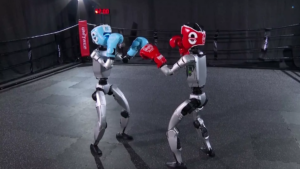


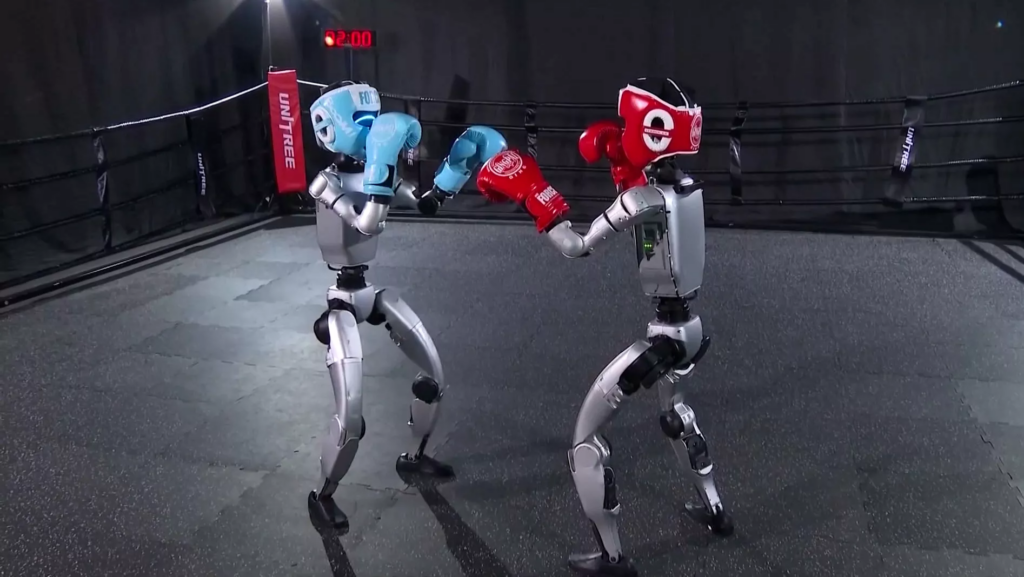
Robotic boxing matches demonstrate new technological capabilities as humanoid machines exchange punches and dodge attacks live inside a packed arena at the World Robot Conference in Beijing. Massive crowds gathered around the ring to watch two human sized machines fight face to face without human intervention. Unlike traditional stage demonstrations this event featured independent movement where each machine had to react to unpredictable strikes in real time. Advanced visual sensors and camera systems processed movement data within split seconds allowing fighters to slip punches tilt away from danger and counter attack smoothly.
Read Also: UAE Launch SEO Satellite Into Space to Advance Sustainability
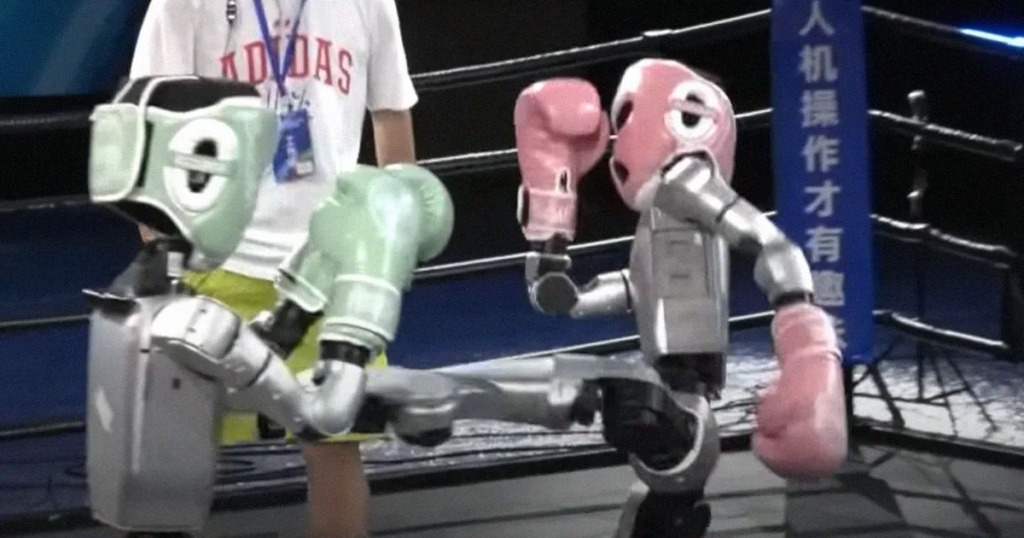
Maintaining dynamic balance on two legs while absorbing sudden physical impacts represented the most impressive achievement on display. When a hard strike hit a metal shoulder powerful internal motors adjusted weight distribution instantly to prevent falls. Watching metal fighters recover their balance after stumbling shocked audience members who cheered every clean combination. Leading Chinese tech firms including Unitree Robotics AgiBot and Fourier Intelligence provided hardware systems supported by specialized artificial intelligence laboratories based in Beijing.
Why robotic boxing matches demonstrate breakthroughs in dynamic balance and movement control
robotic boxing matches demonstrate how advanced physical control algorithms can manage real world momentum and complex physical reactions during fast interactions. Engineers used multi agent reinforcement learning to train machines through thousands of simulated fights before putting them into real arenas.
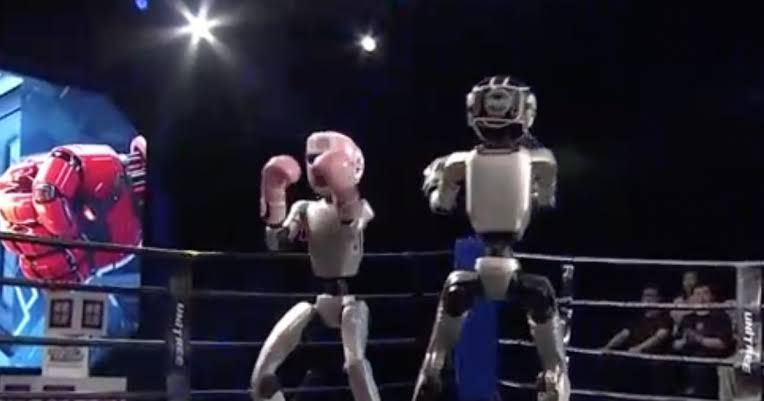
Key engineering accomplishments showcased during the event include:
- robotic boxing matches demonstrate lightning fast optical tracking for dodging incoming physical strikes
- Advanced motor systems adjust joint tension instantly to maintain dynamic bipedal balance
- Multi agent artificial intelligence models allow machines to learn combat strategies independently
Training neural networks through trial and error helps machines develop natural responses instead of following rigid pre written code lines. When a boxing match begins onboard processors calculate body angles distance gaps and movement speeds simultaneously. This constant data processing allows software models to make smart split second decisions under intense pressure.
Read Also: Electric Car Dominance: Things You Don’t Know
robotic boxing matches demonstrate a massive shift toward functional humanoid hardware designed for unpredictable environments. The physical flexibility shown in the ring translates directly to real world applications like industrial manufacturing emergency search and household assistance. Machines that can take heavy impacts duck under obstacles and keep their balance on uneven ground can safely work alongside human teams in dangerous locations.
Exhibition spectators compared the light footwork and quick head slips to professional lightweight human fighters. Technical teams monitored diagnostic readouts from ringside laptops tracking battery levels motor temperature spikes and signal latency. Seeing hardware withstand continuous physical friction proved that structural durability matches software intelligence in modern humanoid designs.
The success of this Beijing event will accelerate investment into commercial robotics research globally. As competition grows among technology companies developers will refine sensor accuracy motor power and algorithm speed even further. Future events will likely showcase longer fights more complex footwork and multi robot group interactions.
Read Also: Hyundai Human Robots Plan Targets 2028 Automated Workforce
Public enthusiasm for automated sports shows how comfortable people are becoming around advanced artificial intelligence systems. Seeing machines move with natural human agility changes public perceptions about what automated hardware can accomplish outside factory walls. robotic boxing matches demonstrate that the era of practical versatile humanoid machines has officially arrived.