


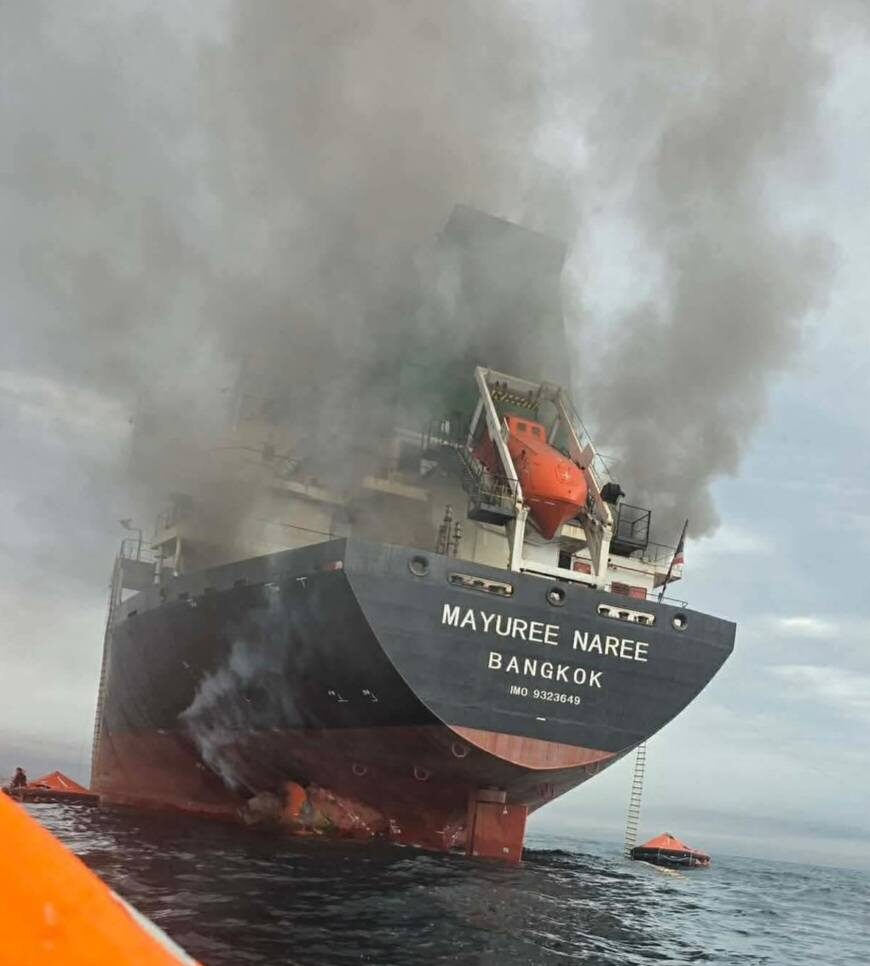
Iran missile attacks history has entered a very dangerous new phase after the Iranian Revolutionary Guard launched at least two missiles at merchant ships passing through the Strait of Hormuz. This shocking piece of news was reported by Axios on Monday, July 6, 2026, quoting an official American source who confirmed that the weapons caused massive physical damage to two large vessels. Luckily, nobody was killed or injured during this sudden assault on the open water.
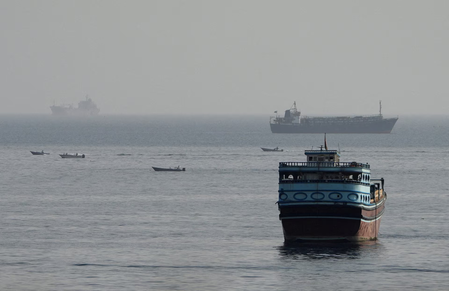
At the same time, the United Kingdom Maritime Trade Operations agency stated that an oil tanker sailing near the coast of Oman was hit directly by an unknown flying object on its left side. This strike caused a sudden fire to break out on the ship while it was moving south. Although the fire was big, the crew managed to handle it without any human deaths or severe chemical leaks into the ocean.
Read Also: Why Is Frozen Iranian Money Still Held in Doha Banks?
The military incident happened just eight nautical miles east of Lima city in Oman. Security experts are saying that these hostile actions prove that the region is still far from being peaceful despite recent political agreements.
Iran missile attacks history and the continuous breakdown of security
Looking back at the whole Iran missile attacks history reveals that commercial shipping has been suffering badly since March 1, 2026. This was the specific day when Iran decided to block the vital sea passage completely as a direct reply to joint military strikes carried out by American and Israeli forces against its territory. The United States answered this move by putting a heavy naval blockade on all major Iranian ports to stop their trade. Sea traffic only started moving again recently after Washington and Tehran signed a special framework agreement on June 17, 2026, to end the active fighting. However, the recent launch shows that a true peace is still very far away.
Read Also: Is US Iran World Cup Drama Getting Worse for the Teams?
Even though the United States opposes these measures, the leadership in Tehran keeps repeating that things will never go back to the old days when ships could pass through the area for free. They want everyone to follow a single path that goes right next to their own coast so they can control who enters and exits the gulf.
Why the latest shipping incident is highly alarming
The attack near the coast of Oman is an important addition to Iran missile attacks history because it happened in a zone that used to be considered relatively safe. When a country fires rockets at oil tankers, it risks creating a massive environmental disaster that could destroy fish and ruin beaches for many years. The shipping company confirmed that their boat was just carrying regular commercial cargo when the projectile hit the hull out of nowhere. Captains sailing through the gulf are now being told to stay highly alert and report any suspicious drones or boats immediately to international naval forces.
Read Also: Frozen Iranian funds: Will Qatar talks move forward?
If these dangerous strikes continue, international insurance companies will raise their prices for cargo ships, which means that global oil and gas prices will go up for regular consumers in Europe and America very quickly. This economic pressure is exactly what the Iranian government wants to create to get more leverage in negotiations.
The broken promises of the June framework agreement
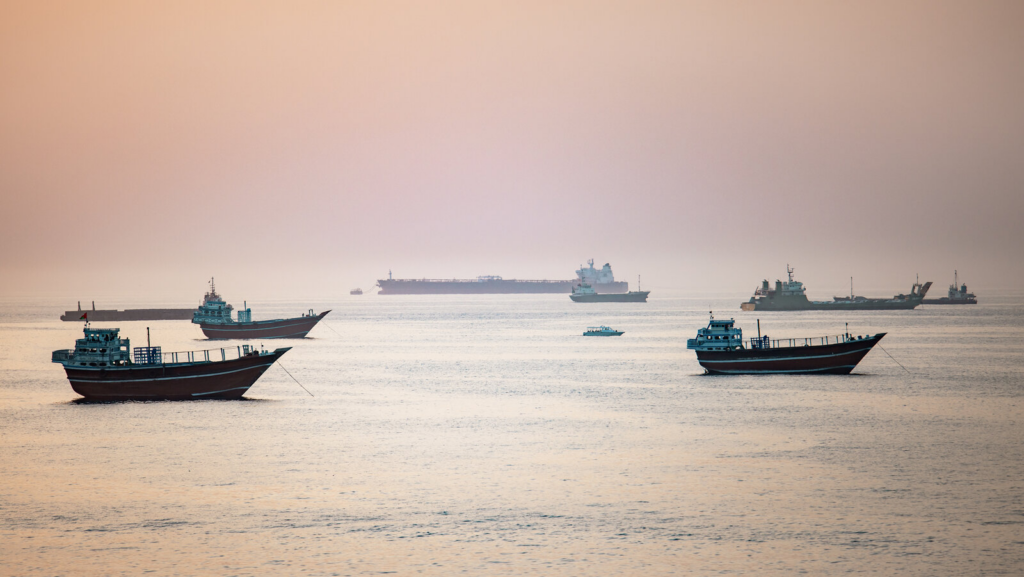
Many political analysts believed that the signed paper on June 17 would finally bring stability back to the Middle East waters. However, this new addition to Iran missile attacks history proves that agreements on paper do not always match what happens on the real battlefield. The Iranian military is sending a clear message to the world that they still hold the keys to the global economy through their control of the strait. They are ready to use force against any vessel that tries to avoid their rules or change the allowed path.
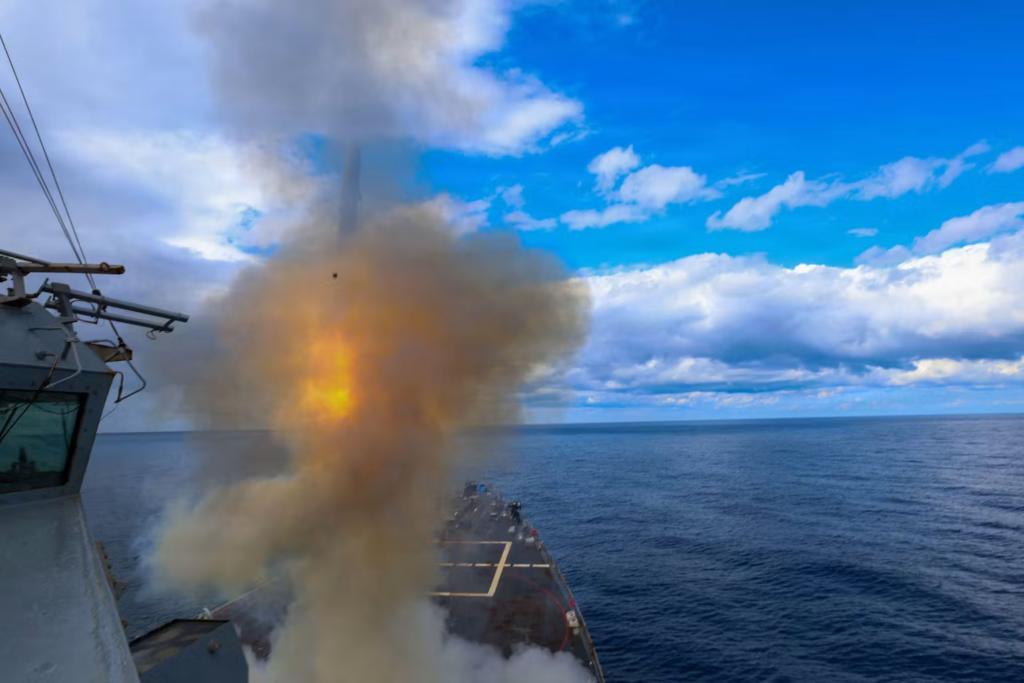
The American navy has several large warships stationed in the area to protect commercial trade, but it is very difficult to stop a sudden missile strike when it is launched from hidden mobile trucks on the mainland. This military advantage makes it easy for local forces to disrupt international trade whenever they feel unhappy with foreign policies.
How shipping crews are trying to survive the danger
Sailors who work on these giant cargo ships are facing terrible stress as they enter the gulf region this week. They know very well that Iran missile attacks history is full of stories where innocent workers were caught in the middle of political wars. Some companies are now hiring private security teams to stay on deck and watch the skies with night vision equipment.
Read Also: Iran nuclear fears grow as inspectors lose access to damaged sites
Others are trying to change their schedules to pass through the narrowest parts of the strait during the middle of the night when it is harder for coastal radars to spot them easily. However, with modern technology and military drones watching the water twenty-four hours a day, hiding a giant steel ship has become almost impossible.
Iran Missile Attacks Threaten Global Trade Future
If the international community cannot find a way to stop these random rocket strikes, the entire shipping industry will have to find alternative routes around the continent of Africa. This change would add weeks to the journey and make everyday products much more expensive for regular people everywhere, which is a direct consequence of how Iran missile attacks disrupt the global supply chain.
The United Arab Emirates and Saudi Arabia are trying to build more land pipelines to move oil away from the danger zone, because preventing another round of Iran missile attacks is critical for regional energy stability, but these huge infrastructure projects take a long time to complete. Until a permanent political solution is reached between all the major governments, Iran missile attacks history will unfortunately keep growing with new dangerous incidents every single month. The local rulers know that the world needs their oil, so they use this power and launch fresh Iran missile attacks to threaten their political enemies without worrying about international laws.
In conclusion, the new rocket strikes against the oil tankers show that the maritime war is far from over. We cannot ignore the fact that innocent merchant sailors are being put in extreme danger just to send political messages between big nations. By attacking ships near Oman, the local forces are showing that they do not respect the recent peace agreements signed in June. It is very clear that keeping a close eye on Iran missile attacks history is the only way for global trade planners to understand the true level of danger inside the world’s most critical water passage today.